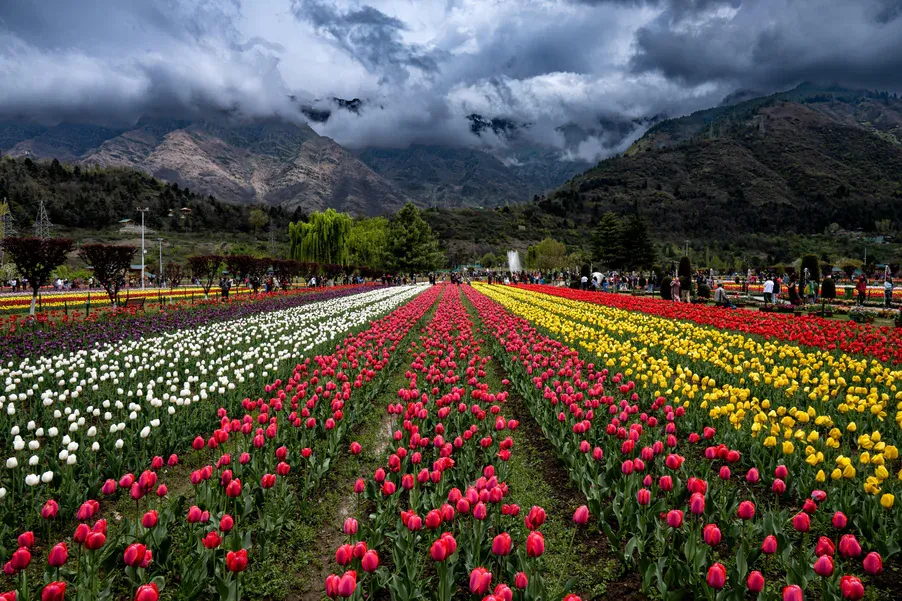
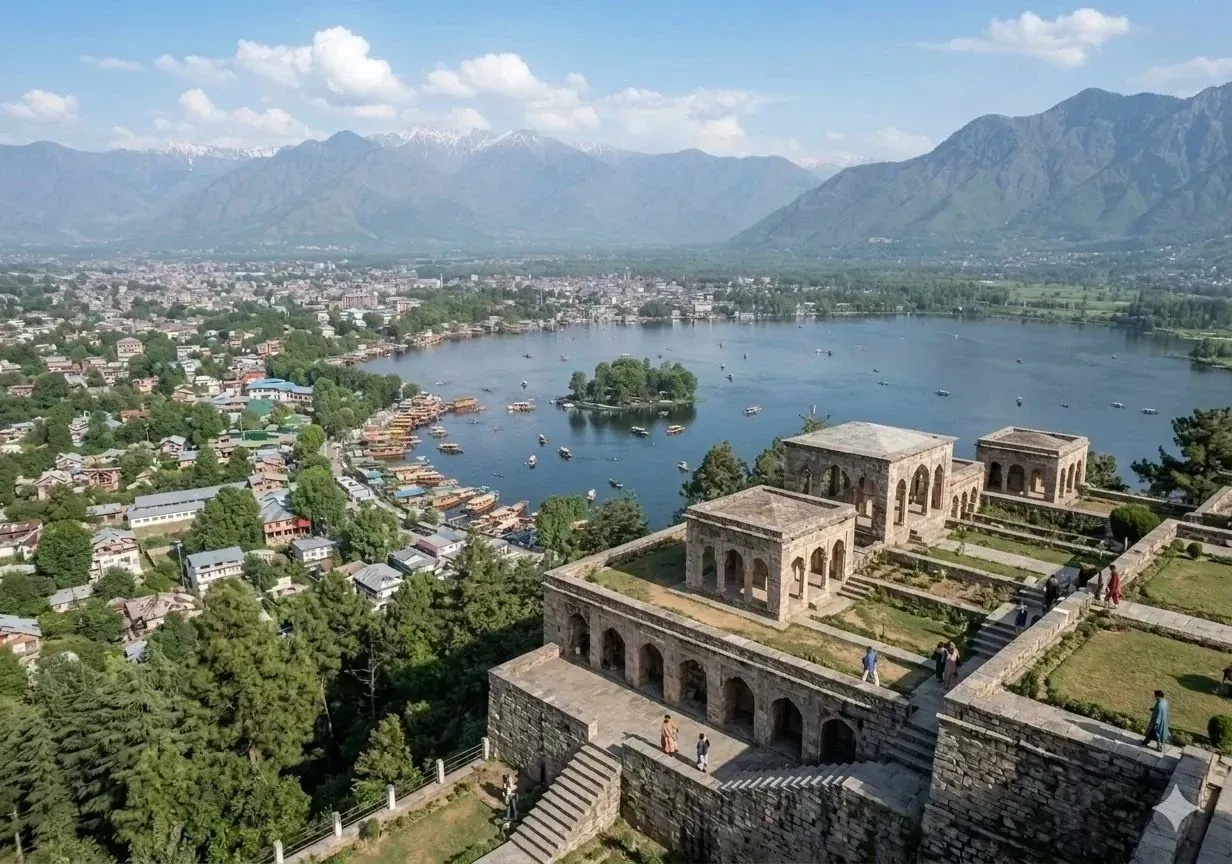
In Srinagar – After breakfast sightseeing of Srinagar Which includes. Mughal Gardens With terraced lawns, cascading fountains, paint-box-bright flowerbeds with the panorama of the Dal lake in front of them – these Mughal Gardens are the Mughal Emperors’ concept of paradise and are today very popular places.
Shalimar Bagh: Built by Emperor Jehangir for his wife Nur Jehan, Shalimar Bagh, 15 Kms from the TRC, is a beautiful garden with sweeping vistas over gardens and lakes, and shallow terraces. The garden is 539 m by 182 m and has four terraces, rising one above the other. A canal lined with polished stones and supplied with water from Harwan runs through the middle of the garden. The fourth terrace, by far the best, was once reserved for royal ladies.
Nishat Bagh: Situated on the banks of the Dal Lake, with the Zabarwan Mountains as its backdrop, (11 km. from TRC), this ‘garden of bliss’ commands a magnificent view of the lake and the snow-capped Pir Panjal mountain range which stands far away to the west of the valley. Nishat was designed in 1633 AD by Asif Khan, brother of Nur Jehan.
Chashma Shahi (“Royal Spring”) received its name from its water source, a spring located on its uppermost terrace. The garden, one of the smaller Kashmiri gardens around Dal Lake, is found on the south-eastern side of the lake. Chashma Shahi was built by the Mughal governor Ali Mardan Khan under the emperor Shah Jehan in 1632-1633.
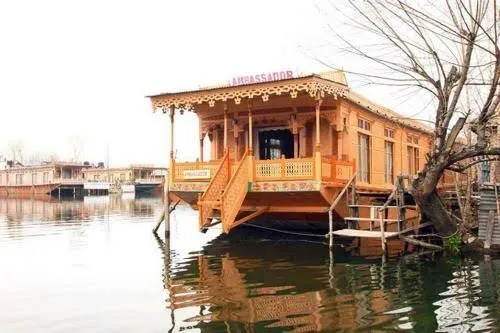
Afternoon proceed for Old City Tour of Srinagar visiting Shahi Hamdan & Jamia Masjid, monument of medieval architecture etc. Drive & walk thru the Old town of City, where one can see the colourful life & Culture of people living around. Make a Heritage Walk thru the narrow streets of City along the River Jhelum. On return visit a local Handicrafts Emporium for hand-knotted specialty Silken carpets, shawls, jewellery ornaments. Wazwan Dinner will be served which is a Multi-Course Royal Meal of Kashmir. ‘Waza’ literally means cook and ‘Wan’ means shop; ‘Wazwan’ means setting up a feast in the host’s courtyard. Wazas are obsessive and passionate artistes. The preparation of the meal begins long before sunrise — at 3 am. The Wasta Waza (Master Chef) supervises all other Wazas. The authentic Wazwan is made only of sheep meat – and different dishes require meat from different organs. Meat is prepared to be cooked within one hour of the butchering to maintain taste. It is minced with a walnut wood hammer on stone until it loses its stringiness. Wazas beat the meat till all nerves of the mutton are entirely dissolved for a creamy consistency. The flavouring blends are based not on spices but on mild herbs and flower essences. The red dye in food is from flowers like Cockscomb, called Mawal locally. The pre-cooking methods require a great deal of precision, culinary art, patience, and enormous love that Wazas liberally shower on their creations. The flavouring blends are based not on spices but on mild herbs and flower essences. The red dye in food is from flowers like Cockscomb, called Mawal locally. The pre-cooking methods require a great deal of precision, culinary art, patience, and enormous love that Wazas liberally shower on their creations. After the Wazwan Dinner, night stay at Houseboat.